Copper penetration through skin
A molecule can be interesting in a culture dish and difficult to deliver across the surface that faces the world.
The outer barrier
The topical GHK review identifies poor permeability through the stratum corneum, the skin’s outer barrier, as a central delivery challenge. It considers changes to the peptide and approaches to delivery. The physical obstacle gives me a less glamorous subject to think about than collagen production, and a more immediate one.
It makes “topical” an incomplete description of the experiment. The preparation carrying a peptide and the tissue receiving it give the result its setting. I’m more curious about those particulars than about an ingredient name sitting by itself.
Copper in excised human skin
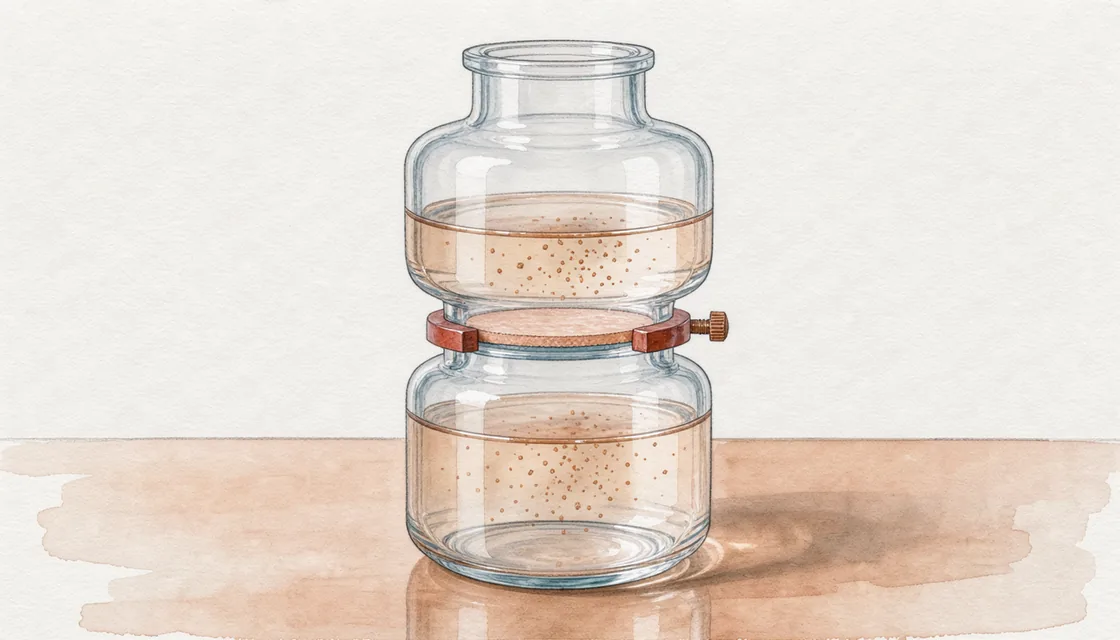
In a laboratory study using excised human skin, copper applied as a GHK-Cu tripeptide preparation permeated dermatomed skin and was retained within it over 48 hours. Over that period, 136.2 +/- 17.5 ug/cm^2 of copper permeated, while 97 +/- 6.6 ug/cm^2 was retained as a dermal depot—a store within the skin. These figures describe copper in that laboratory tissue preparation.
The retained material gives the delivery question a location. The noun also matters to me: copper was measured. A copper result leaves questions about the intact peptide complex and its subsequent activity. I put that limit on the interpretation because the measured material is so specific.
I like the concreteness of this encounter with skin. The experiment follows material through tissue, while the visible outcome still requires a different observation. The wrinkle research is where that next interest leads.
Changing the delivery
The topical review considers palmitoylation, a modification producing Pal-GHK, and microneedle pretreatment as ways to enhance penetration. These are experimental approaches described in the review. They make the delivery problem more concrete without supplying a personal skin-care routine.
The follow-up I’m eager for would ask whether a specified preparation brings a visible benefit with an acceptable safety profile. Better passage across a barrier would answer a physical question; the broader outcome would still need measuring. I’d enjoy seeing those observations brought together, with the same preparation followed from entry into tissue to a meaningful skin result.