Wrinkles and skin measurements
A percentage of people showing a synthesis response tells a particular story about skin.
The reported procollagen comparison
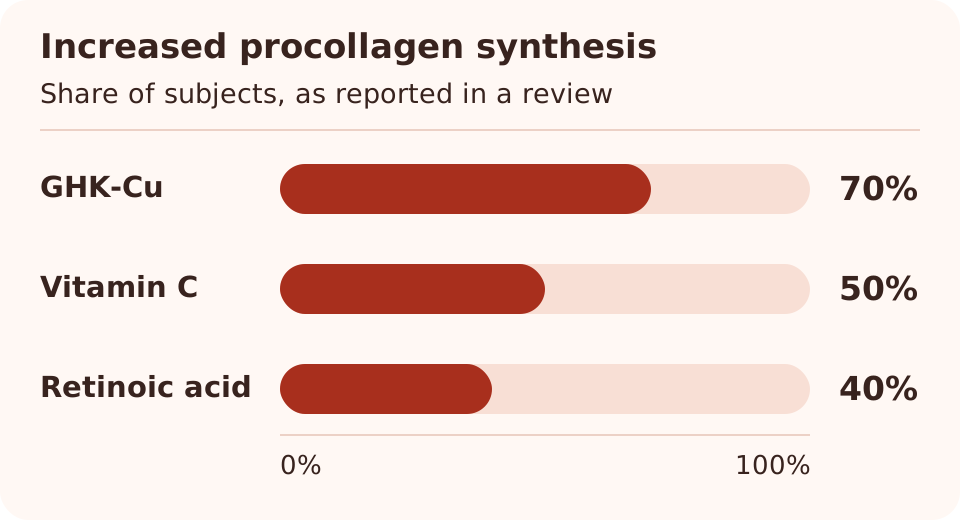
The anti-wrinkle review reports increased procollagen synthesis in 70% of GHK-Cu-treated subjects, compared with 50% for vitamin C and 40% for retinoic acid. That is an inviting comparison, and I understand why it travels. The endpoint needs to travel with it: these are percentages of subjects with a synthesis response.
That comparison gives me no percentage reduction in wrinkles. It describes how many subjects showed the reported response, without supplying a matching claim about how much smoother each face became. The difference matters because the larger-looking number is so easy to remember while the thing counted slips away.
Skin outcomes in the reviews
The skin-regeneration review describes placebo-controlled improvements in skin laxity, clarity, fine lines, wrinkle depth and density. These appearance-related outcomes bring the subject closer to a person’s original interest in skin. The paper also brings together clinical and cell-culture studies, which means its broad account contains different kinds of observation.
For a cosmetic question, I’d give the visible outcomes their own room. They offer something a collagen result cannot supply on its own: an account of what changed in skin. The later topical review also gives considerable attention to delivery. The appearance question and the physical preparation remain connected.
GHK in plasma
The same review describes plasma GHK declining from about 200 ng/mL at age 20 to about 80 ng/mL by age 60. It is an easy observation to turn into a story about replacing what age removes. I distrust the neat ending that this story supplies for itself.
A reported age-related decline gives the hypothesis a starting point. It leaves the desirable amount, the route of any intervention and its effect on appearance to be established separately. I’d want those steps measured before treating the plasma observation as an explanation for a face.
The penetration study is useful precisely because it makes one of those steps tangible. It asks what happened to copper applied to skin, a narrower and more physical question than how to reverse aging.